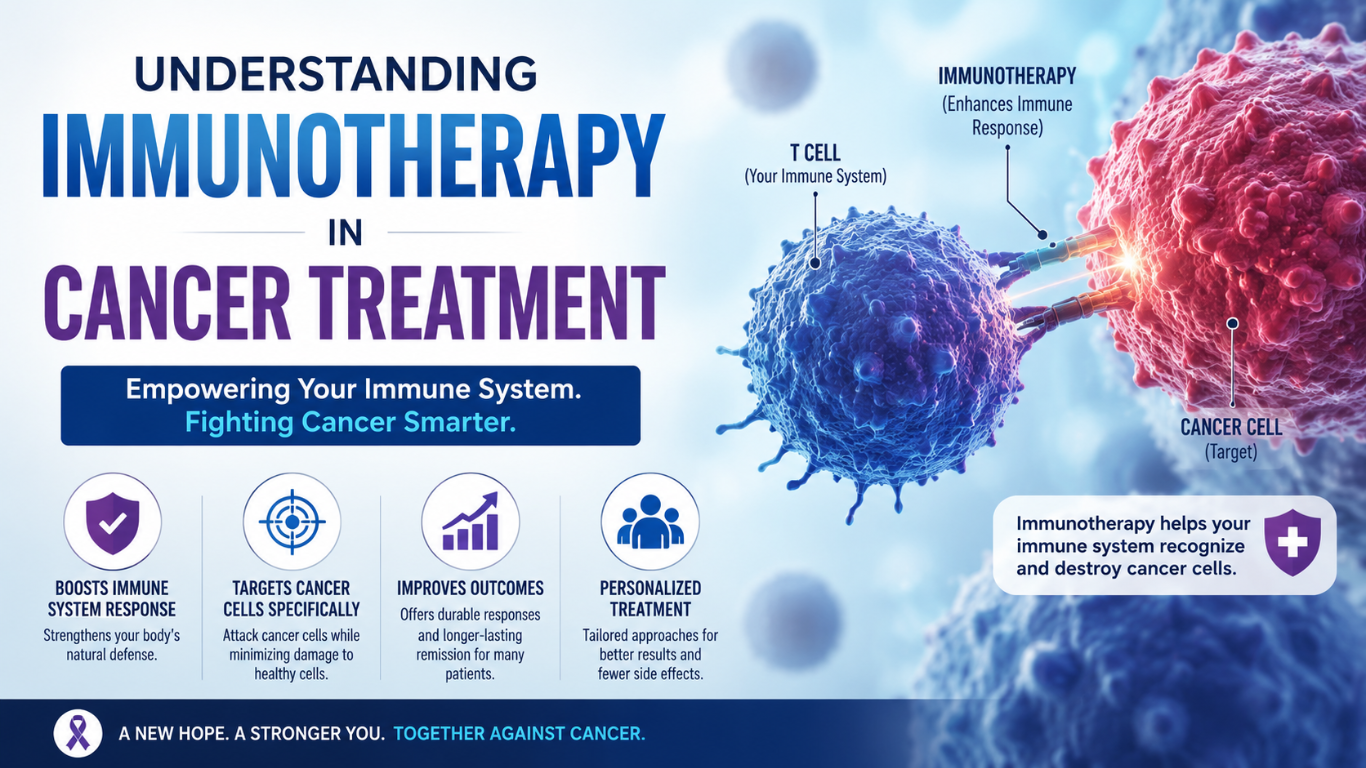
Understanding Immunotherapy in Cancer Treatment
Introduction
Cancer treatment has evolved significantly over the years, and immunotherapy has emerged as one of the most promising advances in modern oncology. Unlike traditional treatments that directly attack cancer cells, immunotherapy helps the body’s immune system recognize and fight cancer more effectively.
Dr. Ajay Sharma provides advanced immunotherapy-based cancer treatment as part of comprehensive precision oncology care.
What is Immunotherapy?
Immunotherapy is a type of cancer treatment that stimulates or strengthens the immune system to identify and destroy cancer cells. It is now widely used in the treatment of several cancers including lung cancer, melanoma, lymphoma, kidney cancer, and certain gastrointestinal cancers.
How Does Immunotherapy Work?
Cancer cells often develop mechanisms to hide from the immune system. Immunotherapy helps remove these barriers and enables immune cells to target cancer cells more effectively.
Types of Immunotherapy
Checkpoint Inhibitors
These drugs help immune cells recognize cancer cells by blocking inhibitory signals.
Monoclonal Antibodies
Laboratory-made antibodies are used to specifically target cancer cells.
Cancer Vaccines
Some vaccines stimulate the immune system to attack cancer cells.
CAR T-Cell Therapy
This advanced treatment modifies immune cells to better identify and destroy cancer cells.
Benefits of Immunotherapy
- Targeted treatment approach
- Improved survival in certain cancers
- Reduced damage to healthy cells
- Long-term cancer control in selected patients
- Personalized cancer treatment
Which Cancers Can Be Treated?
Immunotherapy is commonly used for:
- Lung cancer
- Lymphoma
- Melanoma
- Kidney cancer
- Bladder cancer
- Head and neck cancers
Are There Any Side Effects?
Like all cancer treatments, immunotherapy may cause side effects, including:
- Fatigue
- Skin reactions
- Fever
- Diarrhea
- Inflammation-related symptoms
Most side effects can be managed effectively with proper medical supervision.
Conclusion
Immunotherapy has transformed cancer treatment by offering new hope to many patients with advanced cancers. Early evaluation and expert consultation help determine whether immunotherapy is suitable for a particular patient’s condition.